
From first call to steady state
- 01
Review
How staff actually use AI today, including the tools nobody told you about.
Shadow usage is common and worth finding before an incident does. - 02
Classification
Data mapped by sensitivity, and what may reach which model.
This determines which tools are usable at all. - 03
Policy
Acceptable use written against real workflows, in language staff can follow.
Vague policy gets ignored; specific policy can be enforced. - 04
Controls and evidence
Access control, logging, and injection defences configured in the tools.
Then periodic review, because models and rules both change.
Scope, spelled out
- Acceptable-use policy written for how staff actually work
- Data classification and what may reach a model
- Access control, logging and audit trails
- Prompt-injection and data-leak defences
- Model and vendor risk review
- Staff guidance and periodic policy review
Policy staff can actually follow
A policy copied from a template is ignored within a month. We write acceptable-use rules against how your team genuinely works, so the guidance is specific enough to follow and enforceable when it matters.
- Acceptable-use policy written for how staff actually work
- Data classification and what may reach a model
- Staff guidance and periodic policy review
This is usually when we get the call
- You cannot list which AI tools staff are using
- Client contracts mention confidentiality but not model providers
- There is no record of what was sent to an external AI service
- Nobody can answer what happens if a model produces a wrong answer
Guardrails in the system, not just on paper
Rules that depend on everyone remembering them are not controls. Access control, logging and defences against prompt injection and data leakage are configured in the tools themselves, so the guardrail holds whether or not anyone read the document.
- Access control, logging and audit trails
- Prompt-injection and data-leak defences
- Model and vendor risk review
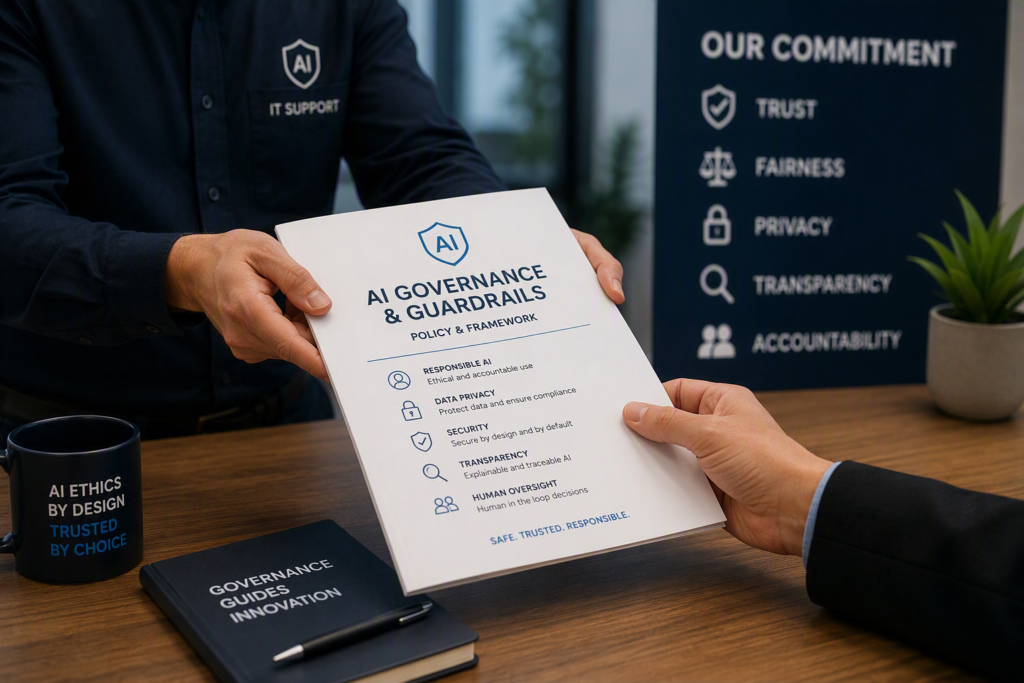
Before the first call
- Honest disclosure of which AI tools staff already use
- Your client confidentiality and regulatory obligations
- A view of data classification, even if informal
- An owner for the policy once it is written
Most delays in any engagement trace back to access, decisions, or content. Naming these up front is what keeps a project on schedule.
Straight answers
Staff are already using AI tools. Is that a problem?
It is common, and worth finding out before an incident forces the question. The practical response is a policy people can follow plus controls in the tools, not a blanket ban that pushes usage further underground.
Do we need a policy if we are not in a regulated industry?
Client confidentiality obligations usually apply regardless of your industry. If your contracts promise to protect client information, that promise extends to whatever tools your staff paste it into. That is the argument that tends to land.
What is the actual risk being managed?
Mainly three: sensitive data reaching a service you have not assessed, model output being treated as fact, and no record of either. Controls and logging address all three; a policy document alone addresses none.
How often does this need revisiting?
Models, tools, and staff habits all change. An annual review keeps it current, and a review after any significant tool change. A policy written once and filed away stops reflecting reality within a year.
Services that pair with this one
Ready to start?
Tell us what you are working with and we will tell you plainly what it takes. No obligation, no pressure.